
Burlington Fire Department Expands Water Rescue Capabilities
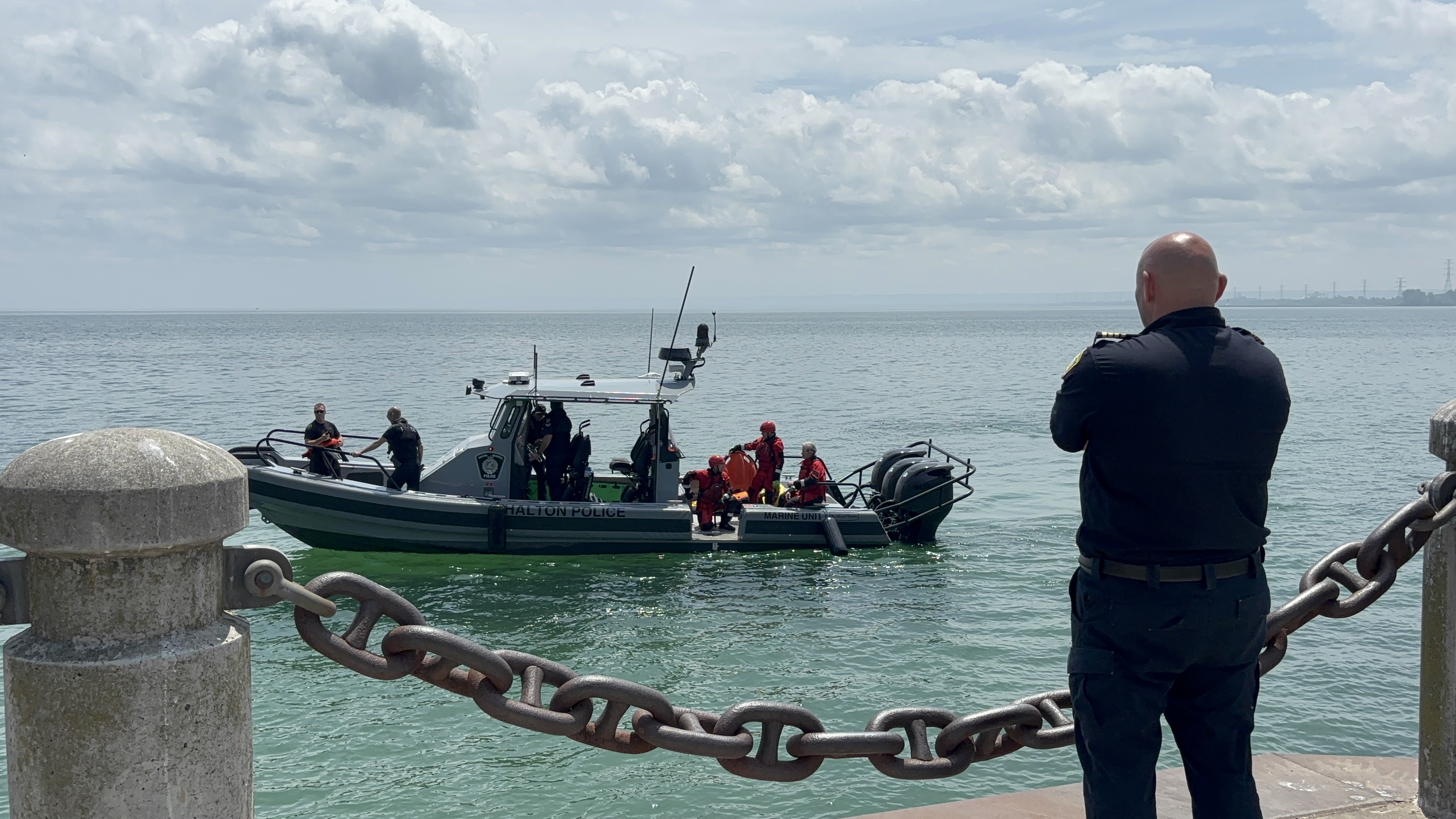
Recently, the Burlington Fire Department, in partnership with Halton Regional Police Service, held joint water rescue training exercises along the Burlington waterfront. The training focused on enhancing rescue efficiency, testing new technology, and preparing crews for real-life emergencies on the water.
Among the new tools used during training was a quick-launch electric board that allows rescuers to travel across the water and return with a swimmer or gear on board. Firefighters also trained with a remote-controlled lifebuoy, designed to help an exhausted swimmer stay afloat and be safely guided back to shore. In addition to new equipment, the City, in partnership with Burlington Hydro, has added numbered markers along Spencer Smith Park and Burlington Beach. These simple additions allow Public Safety Telecommunicators to accurately determine with 911 callers where a rescue is needed, helping first responders arrive faster.
While Burlington Fire and HRPS are continuously investing in training to increase rescue efficiencies, the first and most effective line of defense is prevention. As part of Drowning Prevention Week, the Burlington Fire Department is sharing a few simple habits that can make all the difference:
-
Know how to swim—basic swimming skills can be life-saving. Enroll yourself or your children in swimming lessons if you haven’t already.
-
Never swim alone. Even confident swimmers can run into trouble; having a buddy nearby increases safety and response time.
-
Supervise children and non-swimmers closely, even in shallow water. Accidents happen quickly, and flotation devices can carry kids out farther than expected.
-
Swim only in designated areas, ideally where trained lifeguards are present. Natural water bodies can have unpredictable conditions like currents or drop-offs.
-
Wear a lifejacket when boating. No matter how calm the water looks, a properly fitted life jacket can mean the difference between life and death in an emergency.
-
Avoid alcohol when swimming or boating. Impaired judgment, slower reaction times, and reduced coordination dramatically increase the risk of injury or drowning.
-
Become a lifeguard. Learn essential lifesaving skills through the City’s Aquatic Leadership program to become a lifeguard. Earn some money, build your resume and keep people safe.